
I truly believe there’s a tea for almost any problem, stress, exhaustion, feeling run down, there’s always a cup that fits the moment. But when it comes to inflammation and joint pain, that belief feels even more personal. Those days when your body feels tight, achy, or just off are the days I reach for something natural first.
As someone who isn’t that big on medicine, I’m always looking for simple ways to help any issue I am having. Over the years certain teas have been recommended to me again and again for inflammation, recovery, and just overall wellness. And while you can find lists like this all over the internet, I wanted to share my version, the ones that stand out and are actually worth trying.
Here are 7 teas that can possibly help you fight inflammation and joint pain naturally.
Here are 7 teas that you can grab if you deal with joint pain.
7 Teas to Help You Fight Inflammation Naturally
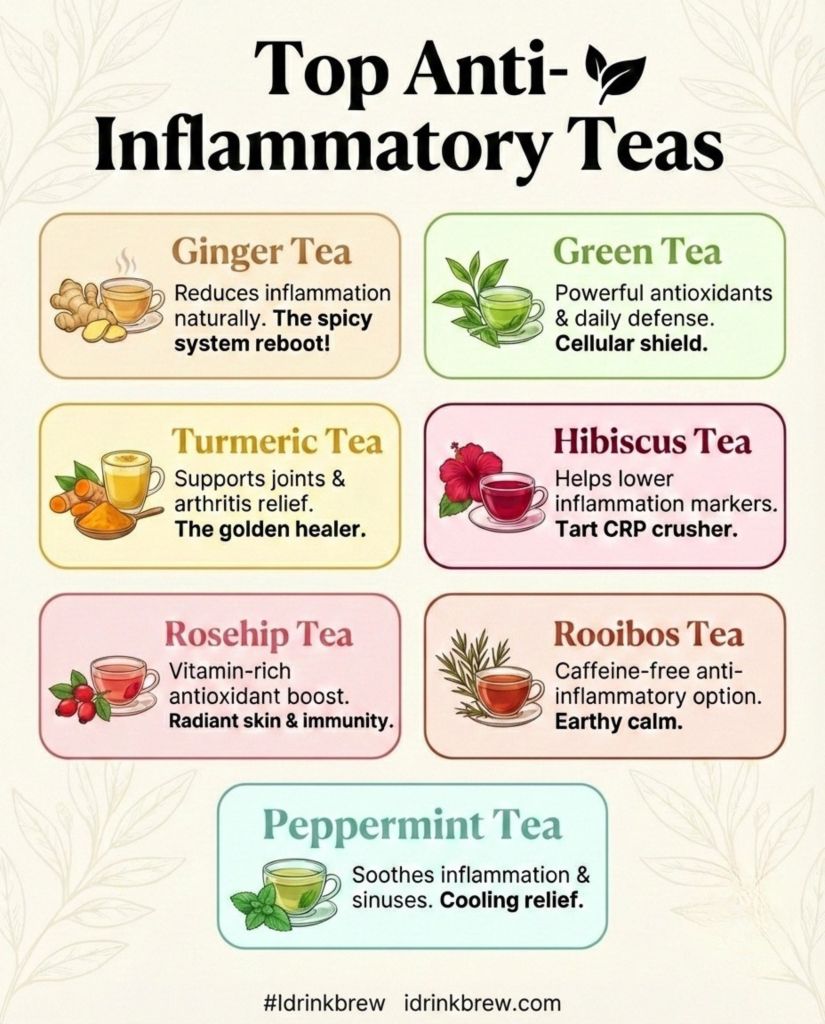
- Ginger: For more than just an upset stomach, ginger is like my superfood. I dice actual ginger and put it in my ginger tea. If you’re feeling sluggish or recovering from a tough workout, ginger is your best friend. It’s packed with gingerols and shogaols, which basically act as a biological “dimmer switch” for inflammatory proteins. It’s spicy, warming, and arguably the most soothing thing you can drink when you feel a flare-up coming on.
- Green Tea: The daily antioxidant boost. There’s a reason green tea is a staple in almost every health conversation. It is definitely one of my morning go-tos at least 3 days of the week. It’s loaded with EGCG, a specific catechin that helps protect your cells from the kind of wear and tear that leads to long-term disease. It provides a nice, steady energy lift, much smoother than the jagged spike you get from coffee.
- Turmeric: The heavy hitter for joint pain. You’ve probably seen turmeric everywhere lately, and the hype is actually justified. Honestly, I am the turmeric hype. It’s possible to see me at the nightclub with orange fingertips from a long day of playing with turmeric. Its active compound, curcumin, is one of the most studied natural anti-inflammatories we have. It’s especially helpful if you deal with stiff joints or arthritis. Just remember the golden rule: always add a tiny pinch of black pepper to your cup. Without it, your body has a hard time absorbing the curcumin.
- Hibiscus: Good for the heart. Hibiscus isn’t just a pretty, tart tea; it’s a functional powerhouse. It’s high in anthocyanins, which have been shown to help lower C-reactive protein, CRP, levels, which are a major marker for inflammation in the body. If you’re looking for something refreshing that also supports your cardiovascular health, this ruby-red brew is it. I will say that I am personally not the biggest fan of hibiscus but everything online says that it is one of the most helpful teas.
- Rosehip: A vitamin C concentrated shot. Rosehip tea comes from the fruit of the rose plant and is incredibly high in vitamin C and vitamin E. This combination is great for neutralizing free radicals and calming systemic inflammation. It’s also a bit of a “beauty tea,” since those same antioxidants do wonders for your skin health.
- Rooibos: The perfect caffeine-free nightcap. If you want something earthy and sweet before bed, go with rooibos. This South African “red tea” is naturally caffeine-free and contains rare flavonoids like aspalathin. These help lower oxidative stress, making it the perfect choice to help your body repair itself while you sleep.
- Peppermint: A cooling reset. Most people reach for peppermint for digestion, but the menthol in the leaves is also a strong anti-inflammatory. It’s particularly good at soothing the respiratory system and clearing out sinus-related inflammation. It’s crisp, cooling, and a great way to “reset” after a stressful day. Overall, this may be my favorite tea and the one I call on the most besides ginger.
Which one are you reaching for? Adding these teas to your day isn’t just about the physical benefits, it’s about taking five minutes to breathe and be mindful. Whether you like the kick of ginger or the tartness of hibiscus, there’s a blend here that can help you feel a little more like yourself again.
Got a favorite wellness tea that didn’t make the list? Let us know in the comments!